


Cybersecurity in digital transformation is a vital element that underpins the modern business environment. Organisations pursuing digital initiatives need rigorous measures to address the ever-evolving threat landscape. Implementing robust cybersecurity best practices is no longer optional; it is a business-critical requirement that ensures operational continuity and protects stakeholder trust.
Rapid technological advancement has introduced a wave of new digital security trends. Organisations now rely on automated threat intelligence and predictive analytics to identify and neutralise threats before they cause damage. These preventative measures operate with precision, minimising downtime and limiting reputational harm.
Building strong cyber defences and continuously improving safety protocols are essential pillars for maintaining digital innovation. Companies that invest in comprehensive defence strategies not only protect sensitive information but also foster a culture of continuous improvement and long-term cyber resilience.
Why Do You Need Cybersecurity in Digital Transformation?
Today’s digital environment is defined by sophisticated threats, from advanced malware to persistent phishing attacks. Organisations face growing exposure, with cyberattacks capable of breaching sensitive information, disrupting operations, and inflicting significant financial damage.
Cybersecurity in digital transformation is not just a technical requirement; it is a strategic imperative. Businesses that invest in strong digital transformation security measures are better equipped to ensure business continuity and maintain customer confidence. By prioritising cyber resilience and adapting security policies proactively, organisations establish the foundation for sustainable growth and competitive advantage.
Moreover, strong cybersecurity ensures that organisations maintain resilience against emerging challenges. By continuously refining their defence systems, companies reduce risk exposure and prevent disruptions that could otherwise derail strategic objectives.
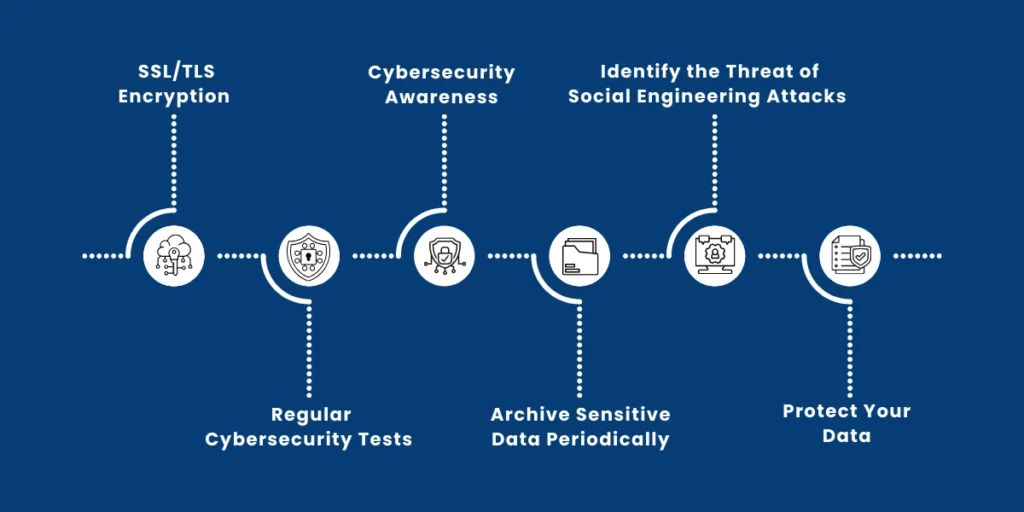
What Are the Top 6 Cybersecurity Practices in Safeguarding Digital Transformations?
1. SSL/TLS Encryption
SSL/TLS encryption is a foundational practice that secures data in transit between systems. It protects sensitive information from interception and tampering by establishing an encrypted communication channel. Organisations that implement SSL/TLS maintain stronger trust with both partners and customers while supporting a secure digital infrastructure.
2. Regular Cybersecurity Tests
Regular security audits help detect vulnerabilities and verify compliance with established standards. Consistent assessments uncover misconfigurations and hidden risks across your security infrastructure. They provide a basis for continuous improvement and strengthen overall defence mechanisms. This proactive approach to testing is essential for any organisation investing in digital transformation security.
3. Cybersecurity Awareness
Employee training is one of the most effective measures for reducing human error and enhancing threat detection. Regular workshops and simulated phishing attacks equip staff with the skills to recognise potential threats. This knowledge cultivates a security-aware culture within the organisation and ensures vigilance during everyday operations.
4. Archive Sensitive Data Periodically
Routine data backups ensure that critical information remains accessible even after an incident. Maintaining secure off-site backups minimises downtime and data loss. This practice is invaluable for system recovery after a breach and directly supports business continuity under adverse conditions, especially against ransomware protection scenarios.
5. Identify the Threat of Social Engineering Attacks
Recognizing social engineering tactics is essential for effective data breach prevention. Employees must be trained to identify phishing attempts, suspicious requests, and anomalous behaviours. Consistent updates, simulated attack exercises, and phishing prevention programs reinforce secure practices. This vigilance protects the most vulnerable link in any cybersecurity chain: the human element.
6. Protect Your Data
Data encryption converts sensitive information into an unreadable format accessible only through authorized keys. It serves as a final line of defence even when other security layers are compromised. Implementing industry-standard encryption protocols significantly strengthens overall data security and supports endpoint security across the organisation.
What Are the Trends Used for Digital Transformations?
The cybersecurity landscape is continuously shaped by emerging digital security trends that redefine how organisations protect their data and systems. Companies are investing more heavily in advanced monitoring systems and adaptive threat intelligence to secure every layer of their infrastructure. These trends are driven by rapid technological advancement and the growing sophistication of cyber threats.
Within this evolving framework, new tools have taken centre stage. Generative AI is being explored to predict potential vulnerabilities, while new security frameworks are being developed to enable rapid incident response. Additionally, quantum computing is approaching mainstream relevance, with the potential to transform encryption methodologies and improve problem-solving capabilities within cybersecurity protocols.
Furthermore, data analytics has become a core component of modern defence strategy. Big data and analytics enable organizations to process massive volumes of information for anomaly detection and predictive threat identification. These advances not only improve security provisions but also foster a culture of continuous improvement and cyber resilience across industries.
Ready For Digital Transformation?
Grow your business with advanced technology and expert digital solutions.
You have a vision. We can help you achieve it.
Bring your vision to life with our expert team. As a global leader, we pave the way in the new era, bringing your ideas to fruition. Partner with us to make your vision a success.
How Does Cybersecurity in Digital Transformations Help in Prevention of Data?
Cybersecurity in digital transformation provides the right framework to protect organizations from unauthorized intrusions. By deploying advanced security measures and real-time monitoring systems, organizations significantly reduce the risk of unauthorized access and potential data leaks. Strategic implementation of layered defences ensures that vulnerabilities are addressed before they can be exploited.
Organisations commonly deploy automated systems to detect suspicious activity in real time. These systems are engineered to trigger alerts and execute immediate countermeasures, strengthening data breach prevention efforts. Rapid response capabilities ensure that potential breaches are contained before they escalate into full-scale incidents.
Additionally, a robust cybersecurity model combines employee training, regular system updates, and enforcement of relevant policies. This multi-layered approach not only safeguards confidential data but also builds a resilient digital environment capable of adapting to new threats. As a result, organizations sustain business continuity and build lasting trust in an ever-changing cyberspace.
How Do Periodic Software Updates Contribute to Maintaining a Secure Infrastructure?
In the current era of digitization, a strong security infrastructure is essential to protect organizational assets. A well-designed security plan not only ensures data protection but also increases business resilience. The following steps describe an integrated approach to building a robust security infrastructure:
- Risk Assessment & Planning: Begin with an analysis of potential weaknesses relative to the current threat landscape. Develop a strategic framework that outlines key security practices aligned with organisational goals. This step is critical for prioritisation and efficient resource allocation.
- Set Access Controls: Implement clearly defined policies for access management and user authentication. Deploy multi-factor authentication and role-based access control to restrict unauthorized entry. This approach reduces exposure to both internal and external threats.
- Install Advanced Monitoring Systems: Invest in real-time monitoring solutions that continuously scan system activity and network traffic. Early-warning systems are critical for detecting and responding to anomalous behaviour as it happens.
- Periodic Software Updates: Ensure all systems and applications receive the latest security patches on a regular schedule. This eliminates known vulnerabilities and prevents cybercriminals from exploiting outdated software. Timely updates are fundamental to maintaining a secure infrastructure.
- Employee Training and Awareness: Conduct regular training sessions focused on reinforcing cybersecurity best practices. A well-informed workforce serves as the first line of defence against potential intrusions and social engineering attacks.
- Disaster Recovery & Backup: Develop a comprehensive disaster recovery plan with regular data backups. This ensures that critical information can be restored quickly following a security incident or system failure.
Conclusion
In conclusion, cybersecurity in digital transformation is a fundamental pillar for any organization that aims to thrive in today’s volatile digital landscape. By implementing layered defences, adhering to established best practices, and continuously optimizing security strategies, organizations not only mitigate risk but also build a foundation for sustainable growth and innovation.
RevInfotech is at the forefront of integrating strong cybersecurity solutions within digital transformation initiatives. Our expertise empowers organisations to strengthen data integrity, streamline operational processes, and improve compliance. By deploying advanced cybersecurity measures, businesses can maintain high performance standards while safeguarding their digital assets for the long term.
Frequently Asked Questions
How do organisations implement effective cybersecurity strategies?
+
Organisations implement effective cybersecurity strategies by combining advanced security tools, continuous employee training, and real-time monitoring systems. These practices work together to enable swift threat detection and build a resilient defence mechanism capable of responding to potential breaches before they escalate.
What makes cybersecurity essential in today’s digital age?
+
Cybersecurity is essential because it protects digital assets from increasingly sophisticated cyber threats. It helps organisations maintain business continuity, safeguard sensitive data, and adapt to new security challenges, all while fostering customer trust and regulatory compliance in an interconnected world.
Why is continuous monitoring important in digital transformations?
+
Continuous monitoring enables real-time threat detection and rapid response to anomalies across digital systems. This proactive approach helps organisations identify and mitigate risks before they escalate, ensuring uninterrupted protection of critical infrastructure and sensitive data throughout the digital transformation journey.
How can cybersecurity contribute to long-term digital success?
+
Cybersecurity contributes to long-term success by reinforcing security frameworks and staying ahead of emerging threats. This comprehensive, adaptive approach to protection allows organizations to focus on innovation, scale confidently, and maintain competitive advantages in a rapidly changing digital landscape.

Article written by
Navdeep Garg, CEO of Revinfotech
<p>I am the founder and CEO of Revinfotech Inc., with over 15 years of experience in leadership, financial services, FinTech, technology, and business management. I am a strategic business leader and hands-on practitioner with a strong track record of buildin ...Read More
Inspired by These Insights? Let’s Talk.
From understanding trends to building solutions, we're here to help you take the next step. Our experts are ready to guide your digital transformation.


