


How Do Digital Wallets Support Touch-Free Payments?
Digital wallets use near-field communication (NFC) technology to enable quick, seamless contactless payments between a smartphone or wearable device and a payment terminal. When a user brings their device close to a compatible point-of-sale system, the wallet transmits encrypted payment data instantly. This eliminates the need for physical cards or cash, making every transaction faster and more hygienic.
One of the biggest advantages of NFC payments is the combination of speed and cleanliness. With a simple tap or wave, consumers can complete purchases without pressing buttons, swiping cards, or signing receipts. This contact-free experience is particularly valuable in high-traffic environments like grocery stores, transit systems, and cafes, where speed and safety matter most.
Contactless payments are also highly secure. Digital wallets typically employ multiple layers of protection, including biometric verification, tokenization, and real-time transaction monitoring. Instead of transmitting the actual card number, a unique digital token is generated for each transaction, which significantly reduces the risk of fraud. As more consumers and businesses embrace this technology, digital wallets will continue driving the shift toward a new era of cashless commerce.
What Types Of Digital Wallets Are Available Today?
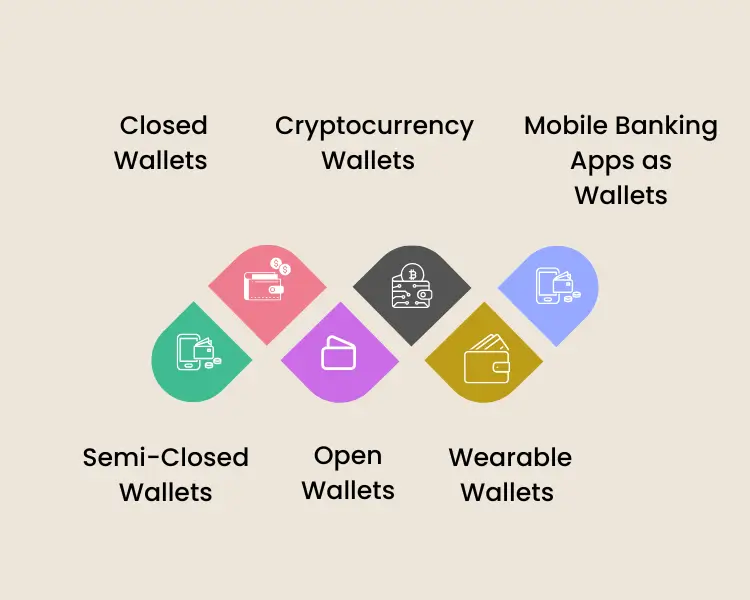
Below are the main types of digital wallets:
1. Closed Wallets
These wallets are issued by specific companies for purchases within their own platform or app. Funds stored in closed wallets cannot be used outside the issuer’s ecosystem.
2. Semi-Closed Wallets
Usable at selected partner merchants, semi-closed wallets support limited transactions. They are commonly used for bill payments and online shopping.
3. Open Wallets
Issued by banks or in partnership with financial institutions, open wallets support all transaction types. Users can even withdraw cash using these wallets, making them the most versatile option.
4. Cryptocurrency Wallets
Designed to store digital assets like Bitcoin and Ethereum, cryptocurrency wallets provide private keys and authentication mechanisms for secure crypto transactions.
5. Mobile Banking Apps as Wallets
Many bank apps now double as digital wallets, enabling fast transfers and payments. They link directly to the user’s bank account for seamless financial management.
6. Wearable Wallets (Smartwatches, Rings, etc.)
Wearable wallets offer tap-to-pay functionality through devices like smartwatches and payment rings. They are ideal for quick, hands-free transactions while on the move.
How Secure Is Biometric Authentication In Digital Wallets?
Biometric authentication in digital wallets has dramatically improved transaction security by using unique biological traits—fingerprints, facial recognition, and iris scans—as replacements for traditional passwords and PINs. These identifiers are extremely difficult to forge, making unauthorized access significantly harder. As digital wallets become part of everyday life, biometrics offer a frictionless way to verify identity without sacrificing speed or convenience.
Biometric data is typically stored locally on the device in encrypted form rather than uploaded to cloud servers. This localized storage, combined with hardware-level protection such as secure enclaves on smartphones, adds a critical layer of defense. Modern systems are also equipped to detect and block spoofing attempts—like photos or fingerprint replicas—ensuring that only genuine users can authorize payments.
As mobile payment trends continue to accelerate, biometric security has become essential for building consumer trust and encouraging widespread adoption. With financial services increasingly shifting to mobile-first experiences, stronger biometrics ensure that convenience never comes at the cost of digital wallet security.
What Are The Privacy Concerns Around Digital Wallets?
While digital wallets deliver convenience and speed, they also raise legitimate digital wallet privacy concerns. Every transaction made through a digital wallet generates data—purchase amount, location, time, and merchant details—that can potentially be captured and stored by wallet providers or third parties. If left unregulated, this data could be used for targeted advertising, sold to data brokers, or exposed in security breaches.
A second concern involves user tracking and profiling. Many digital wallet providers operate within larger ecosystems that span social media, e-commerce, and cloud services. This interconnectedness can lead to unchecked data sharing and the construction of detailed user profiles, often without the consumer’s full understanding or explicit consent.
Innovations such as blockchain in payments are beginning to address some of these privacy challenges by offering decentralized systems with greater transparency and user control. Blockchain enables secure, pseudonymous transactions without relying on central authorities, giving users more ownership over their financial data. However, adoption is still growing, and striking the right balance between convenience and privacy remains a defining challenge in the evolution of digital wallets.
What Are The Key Security Innovations Driving The Digital Wallets Future?
As digital wallets grow more sophisticated, security sits at the heart of every innovation. New technologies are being developed to protect users, reduce fraud, and build lasting trust. Among the many fintech payment solutions emerging today, these are the most impactful security features shaping the future of digital wallets:
• Biometric Authentication – Fingerprint, facial, and iris scans add a powerful, difficult-to-replicate security layer.
• Tokenization – Replaces sensitive card data with unique tokens, significantly reducing exposure to fraud.
• AI-Powered Fraud Detection – Uses machine learning to identify and block suspicious activity in real time.
• Secure Enclave Technology – Encrypts biometric and payment data in an isolated, hardware-protected section of the device.
• Two-Factor Authentication (2FA) – Adds an extra verification step for high-risk or high-value transactions.
• End-to-End Encryption – Ensures payment data remains protected during both transmission and storage.
• Behavioral Biometrics – Monitors user patterns like typing speed and swipe gestures for continuous, passive authentication.
Ready For Digital Transformation?
Grow your business with advanced technology and expert digital solutions.
You have a vision. We can help you achieve it.
Bring your vision to life with our expert team. As a global leader, we pave the way in the new era, bringing your ideas to fruition. Partner with us to make your vision a success.
Conclusion
The future of digital wallets is not a distant concept—it is unfolding right now. As industries embrace digital payments, security standards improve, and user interfaces become more intuitive, digital wallets are emerging as the preferred choice for modern transactions. With continued advances in blockchain, AI, and biometric authentication, the road ahead promises wallets that are smarter, more secure, and deeply personalized.
For both consumers and businesses, staying informed and adaptive is essential. Adopting digital wallets aligns with the broader movement toward cashless societies and technology-driven lifestyles. As innovation accelerates, RevInfotech continues to bridge the gap between finance and technology, unlocking new possibilities in how we save, spend, and manage our financial lives.
Frequently Asked Questions
What is a digital wallet?
+Are digital wallets safe to use?
+Can I use a digital wallet without an internet connection?
+Which digital wallets are most popular?
+Do digital wallets support international payments?
+
Hemal Sehgal
Introducing Hemal Sehgal, a talented and accomplished author with a passion for content writing and a specialization in the blockchain industry. With over two years of experience, Hemal Sehgal has established a strong foothold in the writing world, captivating ...Read More
Inspired by These Insights? Let’s Talk.
From understanding trends to building solutions, we're here to help you take the next step. Our experts are ready to guide your digital transformation.


