Have you noticed how blockchain is moving beyond crypto and reshaping real-world applications? From
finance and governance to digital ownership, the technology has been steadily expanding its reach. Now, a new category of Web3 infrastructure has emerged called Decentralized Physical Infrastructure Networks (DePIN).
DePIN brings blockchain development closer to the physical world, unlocking tangible utility like never before. It powers a blockchain-led future where decentralized infrastructure is woven into our daily lives.
In this blog, we will walk through how DePIN is growing, what makes it different from traditional infrastructure models, and how blockchain could now step beyond the screen and actually power the physical world around us.
How Decentralized Physical Infrastructure Networks Take Blockchain Beyond Just Crypto?
DePIN connects the blockchain to the physical world in a meaningful way. These networks coordinate real resources like storage, connectivity, and clean energy. They are not random tokenized assets. Instead, they are practical tools powered by DePIN blockchain technology that solve real-life problems.
Furthermore, DePIN follows a community-driven model that works for you and by you. It lets individuals and communities own the infrastructure they helped build, while blockchain handles transparency, fair distribution of rewards, and trustless coordination across the network.
Lastly, DePIN offers independence in how we access and build decentralized infrastructure. By gaining ownership and participation in the systems we rely on every day, it acts as a flag bearer for Web3 infrastructure in society. It is far more than just a technology upgrade.
How does DePIN Transform Community Effort into Real Utility?
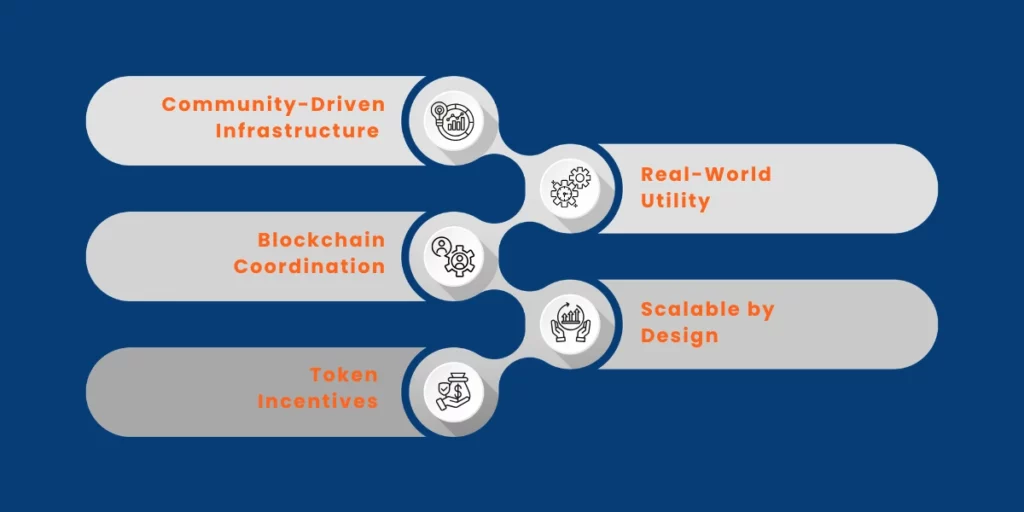
It may sound complex, but DePIN use cases are straightforward and easy to apply. Here is how it brings transformation to communities:
1. Community-Driven Infrastructure
No single company controls these networks. Instead, individuals set up hardware like hotspots, solar panels, and sensors on their own, building community-driven networks from the ground up.
2. Blockchain Coordination
It ensures the system stays in the hands of the community. Blockchain keeps track of contributions, validates performance through smart contracts, and maintains transparency across the entire network.
3. Token Incentives
If you contribute resources, you are rewarded with token incentives. This closes the gap between effort and reward, driving participation and helping the network scale faster.
4. Real-World Utility
Decentralized physical infrastructure networks solve real problems by providing services such as low-cost internet and decentralized cloud storage. These are practical tools, not speculative assets.
5. Scalable by Design
DePIN grows organically without heavy capital expenditure. The more participants join, the stronger, cheaper, and more efficient the network becomes.
How Does DePIN Change the Way We Build Networks?
DePIN fundamentally challenges traditional infrastructure building models by integrating
blockchain into the physical world. It allows communities and individuals to collectively own and operate networks, reducing costs and spreading ownership across all participants.
Additionally, with DePIN, thousands of independent contributors form the network, making it far more resistant to failures and outages. This creates a stronger, more reliable system that can expand even where traditional profit margins are low.
Lastly, DePIN blockchain applications empower the economy by giving real stakes to participants. By contributing resources like storage and energy, they earn tokens and build equity in the network’s growth. This leads to a system that is sustainable, accessible, and easy to adopt.
Which Everyday Challenges can DePIN Fix Right Now?
DePIN does not offer hollow promises. It tackles real problems today. Many people are still disconnected from reliable internet. Here, DePIN projects like the Helium Network serve as a solution by enabling communities to set up wireless hotspots that provide affordable connectivity.
It also addresses the high costs of data storage. People can share unused storage space and create a decentralized cloud that is cheaper, more transparent, and more secure. This provides both individuals and businesses with a democratic alternative to centralized providers.
Beyond connectivity and storage, DePIN has strong potential in clean energy distribution and transportation. Communities can pool solar energy and sell excess power through a decentralized energy grid. These applications prove that DePIN is here to solve everyday problems and lead us toward a smarter, more sustainable future.
What are the Biggest Advantages of DePIN for the Future?
Beyond solving daily problems, DePIN brings several transformative advantages as the future of decentralized networks:
- Democratized Ownership – Infrastructure no longer belongs to a few corporations. Communities and individuals share in both building and benefiting from it.
- Lower Costs – These services are delivered affordably by eliminating middlemen and reducing overhead through decentralized infrastructure.
- Reliability – These networks are harder to shut down, making them less vulnerable to single points of failure compared to traditional centralized systems.
- Incentive-Driven Growth – Token incentives motivate participants to expand the networks, ensuring faster scaling and broader coverage.
- Global Accessibility – DePIN makes it possible to deliver critical infrastructure like internet, storage, or clean energy to remote and underserved areas.
- Transparency – Blockchain ensures that all contributions, rewards, and transactions are verifiable and auditable by anyone.
Conclusion
Decentralized Physical Infrastructure Networks (DePIN) empower communities and open the door to a blockchain-led future fully integrated into our daily lives. DePIN offers independence in how we access and build infrastructure by giving ownership and participation to the people who actually maintain these systems. With its community-driven model, scalable design, token incentives, and real-world utility, we are heading toward a safer and more sustainable future together.
At
RevInfotech, we help companies turn blockchain ideas into reality. Whether it is building DePIN solutions, deploying DeFi platforms, creating dApps, or integrating NFTs, our expert team is ready to deliver. Contact us to explore how DePIN can work for your business.